
Dyrrhachium Coinage Explained: The Cow and Calf Coins of Illyria

Introduction: The Most Recognizable Coins of Illyria
Among all Illyrian coins, none are more iconic than the cow and calf silver issues of Dyrrhachium. Struck for centuries along the Adriatic coast, these coins became the economic backbone of Illyria, circulating widely in trade between the Greek world, inland tribes, and later Roman markets.
To collectors, Dyrrhachium coinage offers something rare: high historical importance, strong visual identity, and an enormous variety of magistrate names, making it both approachable for beginners and endlessly deep for advanced study.
1. Where Was Dyrrhachium and Why Did It Matter?
Dyrrhachium (modern Durrës, Albania) stood at one of the most strategic points on the Adriatic Sea. It served as:
-
A gateway between the Balkans and Italy
-
A key stop on major land and sea trade routes
-
A commercial bridge between Greeks and Illyrian tribes
Because of this position, Dyrrhachium needed reliable, trusted coinage — and it delivered.
👉 Geographic context:
/illyrian-coins/
/illyrian-tribes-map-and-history/
2. Origins of Dyrrhachium Coinage
Coin production at Dyrrhachium began under strong Greek colonial influence, yet it quickly developed a distinct regional identity.
Early Characteristics
-
Silver drachms and staters
-
Greek legends naming magistrates
-
Designs emphasizing fertility and prosperity
Unlike royal coinage, Dyrrhachium’s issues were civic coins, authorized by the city rather than a king.
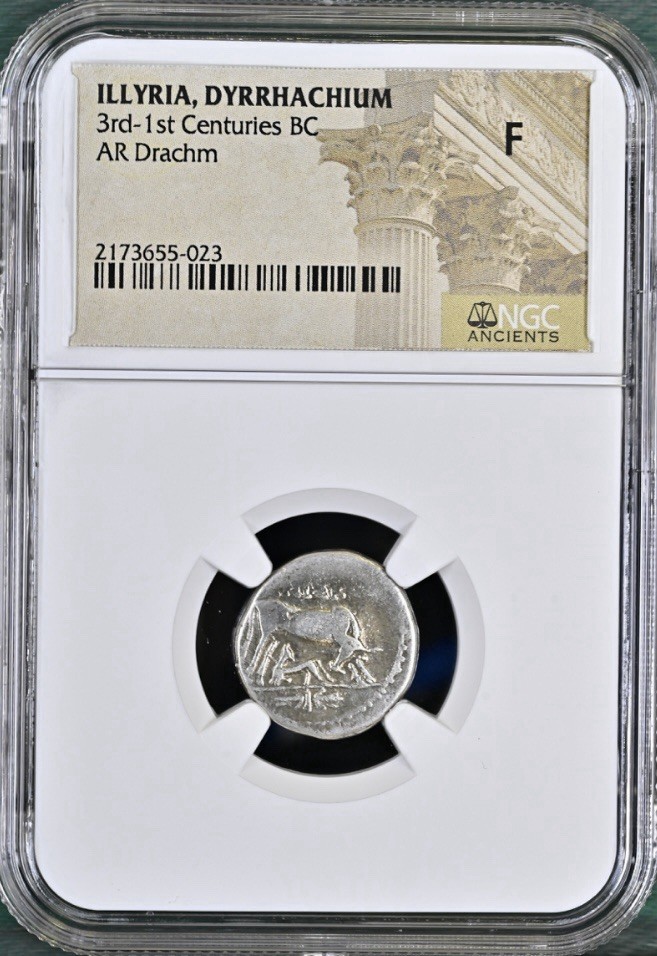
3. The Cow and Calf Design Explained
The famous cow and calf motif is more than decoration — it is a symbol of abundance, continuity, and economic stability.
Typical Design
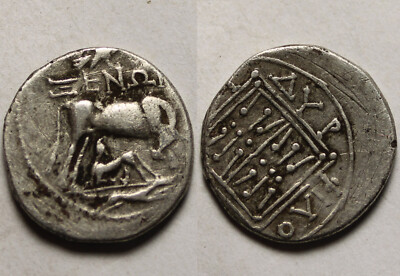
Obverse
-
Cow standing, often right
-
Calf suckling beneath
Reverse
-
Stellate pattern or square
-
City name or magistrate’s name in Greek
-
Often surrounded by dotted borders
This design remained remarkably consistent, helping Dyrrhachium coins gain trust across regions.
4. Magistrates and Legends on Dyrrhachium Coins
One of the most fascinating aspects of Dyrrhachium coinage is the sheer number of named magistrates.
Why Magistrates Matter
-
Each issue names a different official
-
Changes help date coins chronologically
-
Some names appear only once → extreme rarity
Legends are written in Greek, reinforcing Dyrrhachium’s role in the Hellenic trade network.
👉 Learn to read them:
/illyrian-coin-legends-explained/
5. Dyrrhachium and Illyrian Kings
Although Dyrrhachium was a civic mint, it occasionally struck coins under Illyrian royal authority.
Most notably, Monunius issued silver coins using Dyrrhachium’s established types. This ensured acceptance while signaling royal control.
👉 Royal connection:/king-monunius-illyrian-coins/
6. Weight Standards and Metal
Dyrrhachium coins generally follow Greek weight standards, adapted for regional use.
Common Traits
-
Silver (AR)
-
Consistent weights within series
-
Slight variations reflecting period and authority
These standards made Dyrrhachium coins trusted far beyond Illyria itself.
7. How Rare Are Dyrrhachium Coins Today?
While Dyrrhachium produced coins in large numbers compared to other Illyrian mints, survival rates vary widely.
-
Common magistrates → affordable entry coins
-
Rare magistrates → highly collectible
-
High-grade examples → strong premiums
This range makes Dyrrhachium an excellent starting point for Illyrian collectors.
👉 Market overview:
/illyrian-coin-values/
8. How to Identify a Dyrrhachium Coin
Key identification steps:
-
Confirm cow and calf design
-
Read the Greek magistrate legend
-
Check silver weight
-
Compare reverse symbol style
Be cautious: similar types exist from nearby mints such as Apollonia.
👉 Identification help:
/how-to-identify-illyrian-coins/
👉 Compare with:
/apollonia-illyrian-coins/
9. Dyrrhachium Under Roman Rule
After Roman conquest, Dyrrhachium continued as an important city, but its independent civic coinage declined.
Roman provincial issues gradually replaced local silver, marking the end of Dyrrhachium’s unique numismatic identity.
👉 Transition explained:
/illyria-under-rome-coinage/
/roman-provincial-coins-illyria/
Internal Linking (Authority Flow)
🔼 Pillar page:
/illyrian-coins/
🔁 Sibling articles:
-
/king-monunius-illyrian-coins/
-
/king-gentius-coinage/
🔽 Deeper study:
-
/illyrian-coin-legends-explained/
Final Thoughts: The Heart of Illyrian Coinage
Dyrrhachium coins represent the economic heart of ancient Illyria. Their enduring design, massive magistrate variety, and regional importance make them one of the most rewarding ancient coin series to study and collect.
If Illyrian coinage has a foundation, Dyrrhachium is it.