
Alexander Tetradrachms by Mints and Monograms
Here you gonna find a complete guide to Alexander Tetradrachm Monograms attribution and more. Alexander Tetradrachm Monograms
Introduction: Why Mints and Monograms Matter
Silver tetradrachms struck in the name of Alexander the Great are among the most common — and most misunderstood — ancient coins. At first glance, many appear identical: Herakles on the obverse, Zeus seated on the reverse, and the legend ΑΛΕΞΑΝΔΡΟΥ.
But the real information lies in the small details.
Monograms, symbols, and mint marks allow scholars and collectors to:
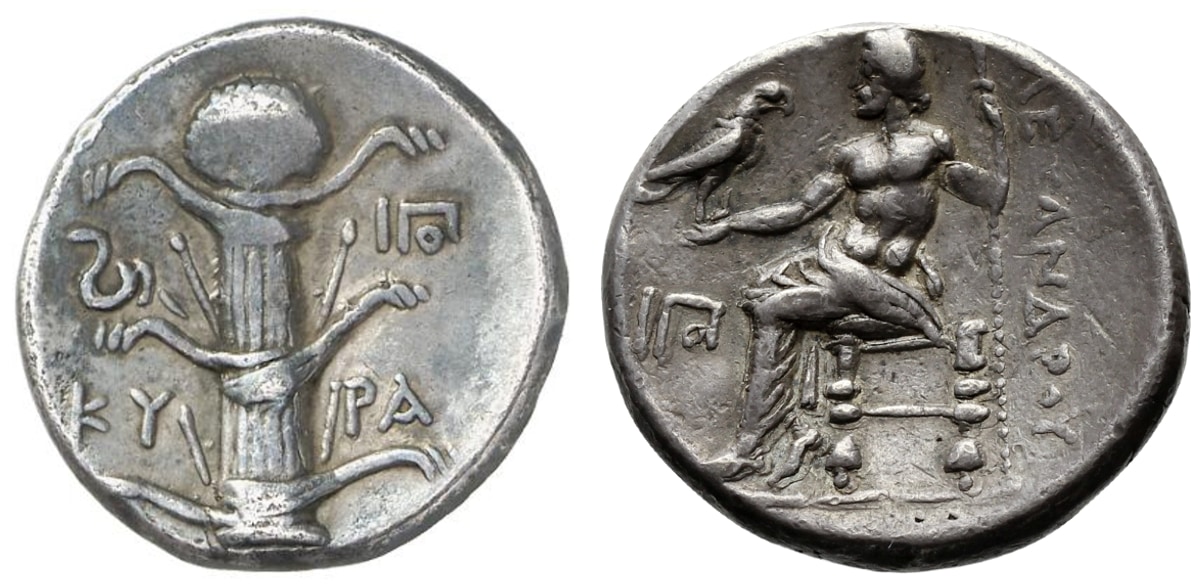
identify where a coin was struck
-
narrow down its date
-
distinguish lifetime from posthumous issues
-
understand how Alexander’s empire functioned financially
This page is the master pillar for mint and monogram attribution.
1. What Is a Monogram on an Alexander Coin?
A monogram is a compact symbol formed from one or more Greek letters, usually representing:
-
a mint official
-
a control mark
-
a workshop identifier
On Alexander tetradrachms, monograms appear:
-
beneath Zeus’ throne
-
in the left or right field
-
near the scepter or eagle
They are not decorative — they are administrative tools.
2. Why Alexander Used Monograms Instead of Dates
Alexander’s empire expanded too fast for dated coinage to be practical. Instead, his administration relied on:
-
standardized designs
-
local mints
-
internal control symbols
Monograms allowed:
-
accountability
-
production tracking
-
quality control
This system was flexible enough to function from Macedon to Mesopotamia.
3. Major Alexander Tetradrachm Mints
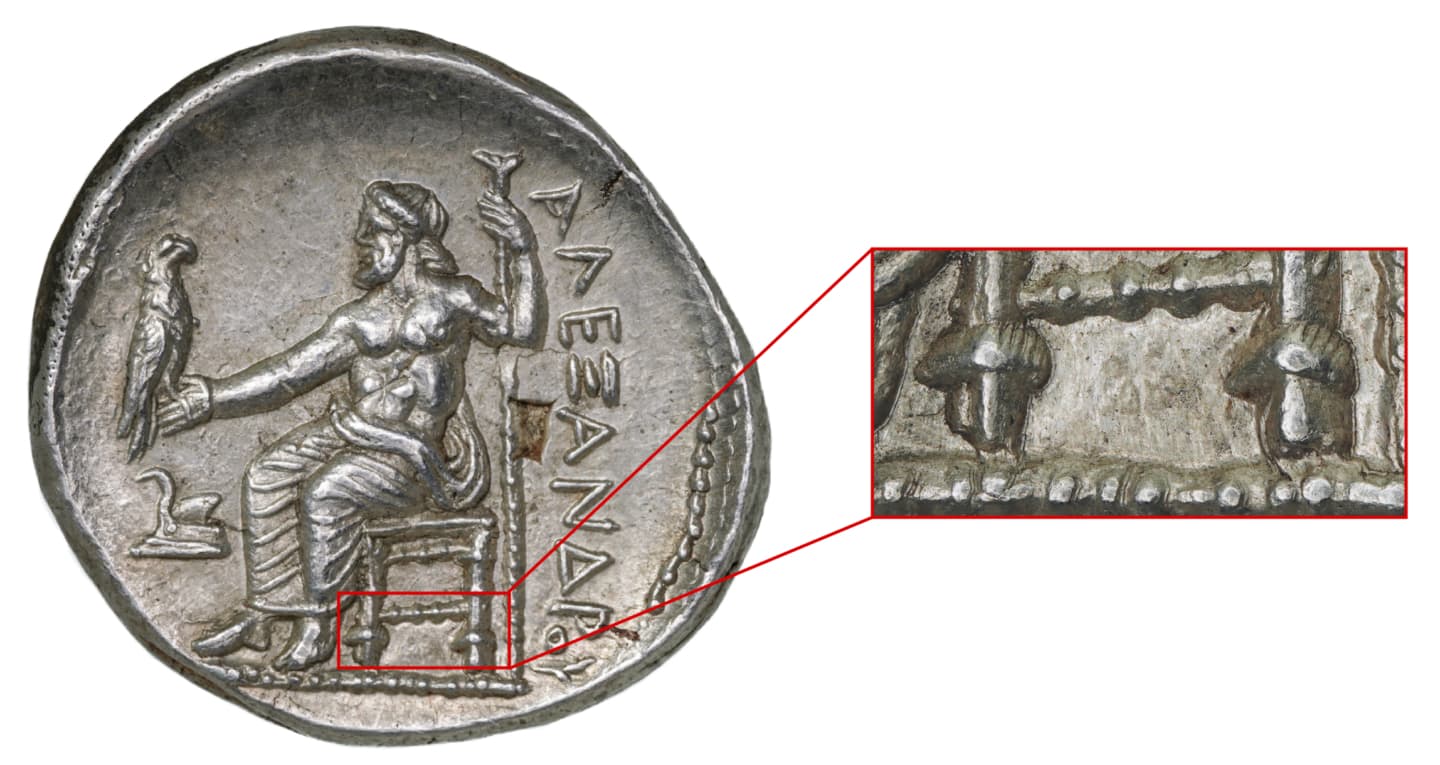
Alexander coins were struck at dozens of mints. Below are the most important ones for collectors.
Macedon Proper
-
Pella
-
Amphipolis
Characteristics:
-
early issues
-
strong engraving
-
compact flans
Asia Minor
-
Lampsacus
-
Sardis
-
Miletus
Characteristics:
-
refined style
-
early mass production
-
frequent monograms
Phoenicia and Syria
-
Tyre
-
Sidon
-
Arados
Characteristics:
-
-
large output
-
clear symbols
-
excellent silver quality
Egypt
-
Alexandria
Characteristics:
-
slightly heavier fabric
-
distinctive style
-
often posthumous
Mesopotamia and the East
-
Babylon
-
Susa
Characteristics:
-
massive production
-
complex monogram systems
-
long posthumous continuation
4. How to Read Monograms Step by Step
Step 1: Locate the Symbol
Look:
-
beneath Zeus’ throne
-
in the left or right field
-
near the scepter
Step 2: Identify Letter Forms
Greek letters may be:
-
stacked
-
intertwined
-
abbreviated
Step 3: Compare with Known References
Monograms are matched against:
-
catalog databases
-
hoard studies
-
museum examples
No single symbol works alone — context is everything.
5. Lifetime vs Posthumous Issues (Monogram Clues)
Monograms help determine when a coin was struck.
Lifetime Issues
-
fewer mints
-
simpler control systems
-
higher stylistic consistency
-
struck before 323 BCE
Posthumous Issues
-
many more mints
-
complex monogram systems
-
wide stylistic variation
-
struck for centuries
This distinction is essential for valuation and historical accuracy.
👉 Core context:
/alexander-the-great-coins/
6. Common Monogram Positions and Their Meaning
| Location | Meaning |
|---|---|
| Under throne | Mint or magistrate |
| Left field | Control symbol |
| Right field | Secondary control |
| Below throne line | Workshop mark |
Combinations of symbols often indicate specific years or officials.
7. Style as a Secondary Identifier
Even with worn monograms, style can help:
-
Herakles’ facial structure
-
lion skin rendering
-
Zeus’ throne details
-
letter shapes in ΑΛΕΞΑΝΔΡΟΥ
Style often confirms or corrects monogram-based attribution.
8. Why Misattributions Are So Common
Common mistakes include:
-
assuming all Alexander coins are from Macedon
-
ignoring monograms
-
confusing similar symbols from different mints
-
trusting dealer labels without verification
Alexander coins demand slow, methodical attribution.
9. Collecting by Mint: Beginner to Advanced
Beginner
-
any clear Alexander tetradrachm
-
focus on type recognition
Intermediate
-
different mints
-
readable monograms
Advanced
-
lifetime issues
-
rare eastern mints
-
stylistic die studies
Alexander tetradrachms are a lifetime study, not a one-coin category.
10. Relationship to Successor Coinage
After Alexander’s death, his successors continued striking tetradrachms in his name because:
-
the type was universally trusted
-
economies depended on it
-
political legitimacy required continuity
Understanding monograms helps separate Alexander-era coins from successor-era coins.
Internal Linking (PILLAR NETWORK)
🔼 Parent pillar:
/macedonian-coins/
🔁 Core Macedonian pillars:
-
/alexander-the-great-coins/
-
/philip-ii-macedon-coins/
-
/macedonian-coin-identification/
🔽 Related clusters:
-
/greek-coins/
-
/hellenistic-coins/
Final Thoughts: Small Symbols, Big History
On Alexander tetradrachms, the smallest marks carry the biggest meaning.
Monograms and symbols transform a “common” coin into:
-
a specific mint
-
a specific moment
-
a trace of imperial administration
Learning them is the key to moving from collector to specialist.